
Inter Faith Marriages: A Ministerial Need
National Council of Churches in India – Unity and Mission
A Study on Interfaith Marriage

In this post-modern era the organized ‘Faith Based Organizations’ (FBOs) and Society are experiencing lots of challenges to retain their dogmas and traditions due to the changing value systems and by the influence of modern life related orientations. India is not even exempted from these challenges. India is an ‘icon’ of unity in diversity. It is a cradle of most of the major faiths in the world including several folk traditions including the ideologies like Dravidian-ism. For centuries we have examples of Indian spirituality such as cohesive living, where all live in harmony as faith communities along with all creation. Indian spirituality upholds the essence of inclusivity and affirms that God is creator; every atom in creation is God’s handiwork, including human communities. There is diversity in God’s creation but certainly not any discriminatory elements in them. Therefore, recognizing the value of human life and love, and also respecting the relationship, marriage is a bridge to unite humans with all their diversities to live as an inclusive communities.
The traditional, social, cultural systems of societies generally dissuade persons to move out far from their native places. In some cases, moving away from one’s native region and settling elsewhere is considered to be an insult to the society of one’s native region. But today, the processes of globalization and liberalization, and the economic and development polices of the States are forcing such migrations. Youngsters move out of their societies to metro cities where they find their employment hubs. Such movements expose them to different cultures, languages, food and heritages and other societal systems. Such a situation brings together men and women of various differences, backgrounds, ethics, faiths, traditions, practices and orientations for studies and employment. This facilitates relationships of mutual understanding, appreciation and love which leads them to inter-faith marriages. For example, when a ‘modern woman’ marries a ‘patriarchal’ man, the understanding of gender-roles, through faith expressions, broadens to create a new flavor of coexistence.
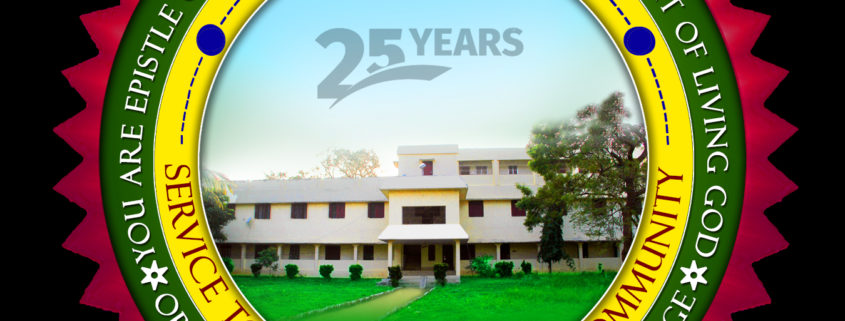

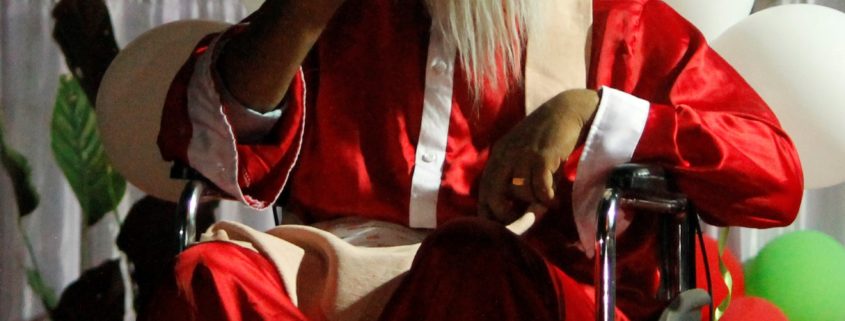

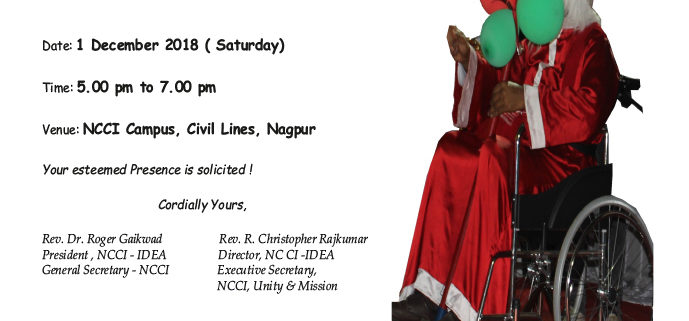
 This celebration is to remember a child (Jesus) who was born during the cold winter in the wilderness of Judea as a migrant child. His birth heralded glad tidings of great Joy to all creation; the joy of inclusion and social justice – the justice of bringing the wise men and shepherds together. Thus, began the Christmas celebration, in the NCCI campus, with a gathering of over 350 people including over 200 Children and People with Disabilities; it was indeed a grand event. The children with disabilities and the persons with disabilities, who gave expression to the good news of the season, ornamented this celebration. The Children with Disabilities (CWD) in particular, enthralled the audience with their dances, songs and enactments, through which they declared the Gospel of inclusion to the people present at the celebration.







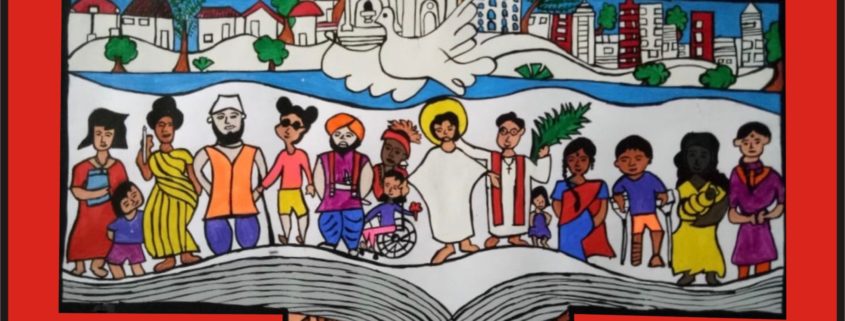
 Theme: “God of the Disabled: