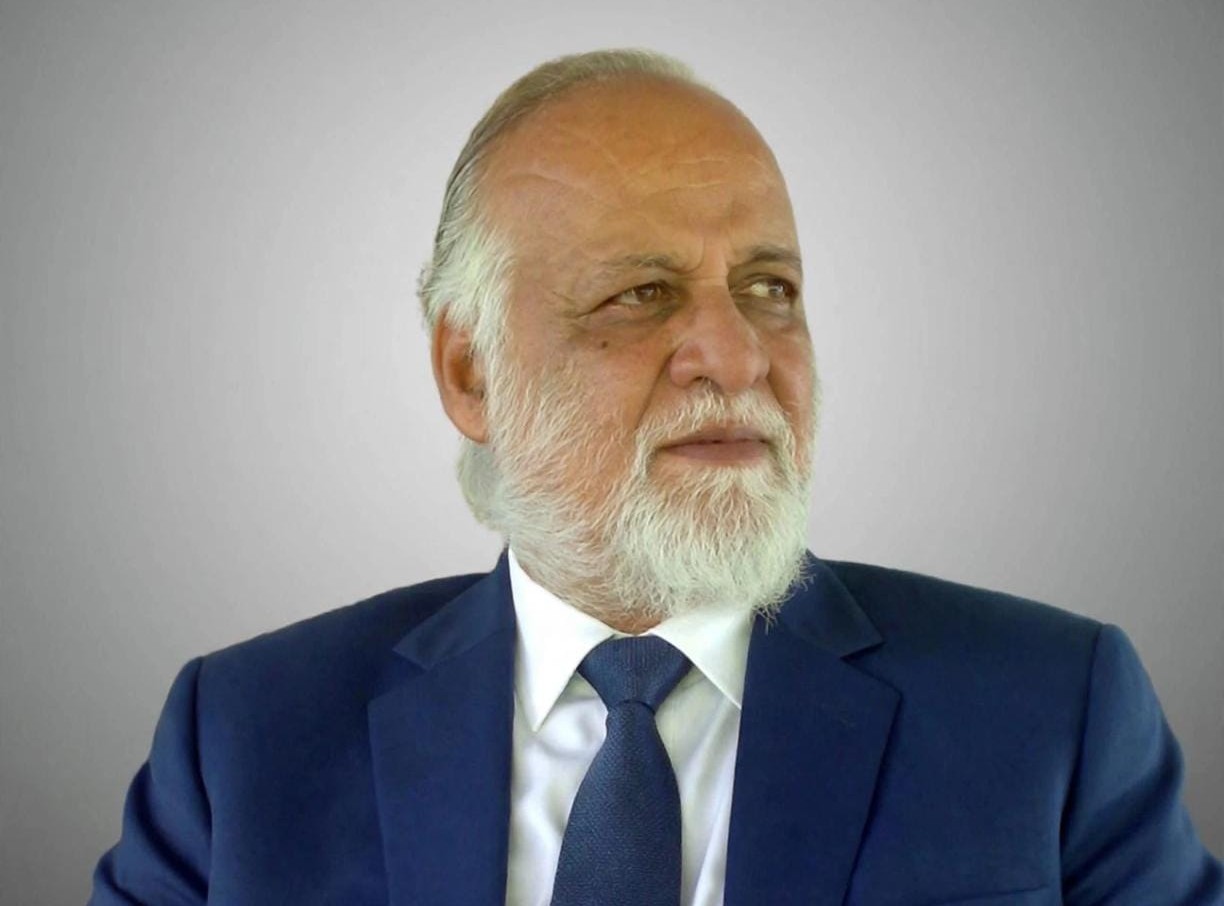
02.02.1947 – 30.09.2026
Rajan‘s favourite verses,
“The Spirit of the Lord is upon me, because he has anointed me to bring good news to the poor. He has sent me to proclaim release to the captives and recovery of sight to the blind, to let the oppressed go free.” – Luke 4:18
Rajan Sudhir Singh was a comrade in the truest, most biblical sense of the word.
He was one who understood that the Gospel cannot remain imprisoned in pulpits, in seminaries, or in theological textbooks. For him, the Word had to become flesh again – in the slums, on the streets, among the workers, the displaced, and the forgotten. He believed that the biblical message of liberation is not a metaphor, but a mandate to act.
His was a pilgrimage of the people:
From BUILD – Bombay Urban Industrial League for Development, where he first learned the language of the street; to DAGA (Documentation for Asian Groups in Asia) in Hong Kong, DAGA was closely working with Christian Conference of Asia,where his vision became ecumenical and global; and back to BUILD as its General Secretary. He later served with SBSS, the social work department of the Church of North India, before his long and defining journey with the National Council of Churches in India (NCCI) as Executive Secretary of the Urban Rural Mission (URM).
But to list his positions is to miss the prophet in him.
Like the prophets of old who left the palace to walk among the people, Rajan chose the margins as his parish. It is no surprise that people affectionately called him “Slum Rajan”. The name came from his courageous initiative to establish a slum settlement at Jaffer Baba Colony in Bandra, Mumbai – not as charity, but as an act of solidarity, affirming the right of the poor to the city, to dignity, to a place to live. It was his way of living out Isaiah 58: to lose the bonds of injustice and to let the oppressed go free, to share your bread with the hungry and bring the homeless poor into your house.
As a teacher, he was a true Guru of liberation theology. He trained hundreds of theological students, not to memorize doctrines, but to read the Bible from below – through the eyes of the Dalit, the Adivasi, the worker, the woman, the slum dweller. His beloved Formation for Mission (FFM) programme was not a training, but a conversion – where students were unlearned of their privilege and reborn into the struggles of the people. He taught that Mission is not Missio ad Gentes (mission to the people), but Missio inter Gentes (mission among the people).
He was a keeper of memory, a scribe of the movement. In his book “Christ Revolution,” he documented the history of the Urban Rural Mission, lest we forget that Christianity in India has a radical history – of standing with the people, not above them. He preserved a legacy so that future generations would know that another church is possible.
Those who walked with him will remember not just the theologian, the leader, the activist, but the human being – full of stories that would make you laugh and think at the same time, full of a disarming humour, and full of an unshakable, almost childlike conviction that another world is possible – if we are willing to work, struggle, and pray for it.
He lived the Parable of the Mustard Seed. He believed that small, faithful actions in a small slum in Bandra could become a shelter for many.
Born on 2 February 1947, just months before India’s independence, his life mirrored the journey of a nation searching for justice. On 30 September 2026, he completed his earthly pilgrimage and began his eternal journey to be with the Lord.
He leaves behind more than institutions and books. He leaves behind a cloud of witnesses – students he taught, communities he stood with, young people whose conscience he awakened, and a movement that is richer because he lived.
“Well done, good and faithful servant.”
Matthew 25:23
Rest in Power, Comrade Rajan. Rest in Peace, Prophet of the Slums. Your work lives on in us.
With deep respect and solidarity,
National Council of Churches in India and the URM family.
